How I Started as a Shadow Operator (Step-by-Step Guide for 2026)
Most people try to “make money online.” Very few learn how to build systems that make money for others. In this article, I break down exactly how I started as a Shadow Operator — from studying operator frameworks to building real infrastructure using Hostinger, WHOP, AI tools, and smart outreach strategies. This is not about freelancing. It’s about building growth machines behind the scenes. Inside, I explain: • What a Shadow Operator actually does • The platforms you must master in 2026 • How to use AI to accelerate execution • How to structure outreach the right way • How to close your first revenue partnership If you want leverage instead of tasks… If you want control instead of chasing clients… If you want to operate behind the scenes and scale quietly… This guide shows you the blueprint. Leverage systems. Control growth. Stay hidden.
SHADOW OPERATORS
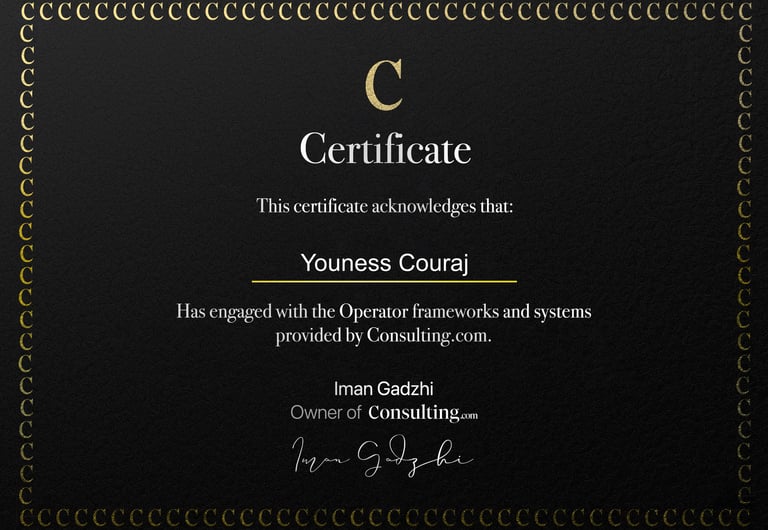
My name is Youness Couraj.
I didn’t get into the online space to become another freelancer fighting for $500 projects. I was looking for leverage. I wanted systems. I wanted to operate behind the scenes and scale businesses without being the “face” of anything.
After studying Iman Gadzhi’s operator frameworks and engaging deeply with his systems, I understood something critical:
A Shadow Operator is not a marketer.
Not a copywriter.
Not just an ads manager.
A Shadow Operator builds growth machines.
You operate quietly. You structure offers. You build funnels. You engineer acquisition systems. And you plug everything together so revenue flows.
Here’s exactly how to start in 2026.
Step 1: Understand What a Shadow Operator Actually Is
Before tools, before platforms mindset.
Your job is simple:
Increase someone else’s revenue using systems.
That requires understanding three pillars:
Offers (high-value positioning)
Funnels (conversion architecture)
Acquisition (traffic & outreach)
If you don’t understand these, you’re just another service provider.
Shadow Operators think in systems, not tasks.
Step 2: Build Your Digital Infrastructure
In 2026, speed wins. AI wins. Automation wins.
You need a clean, professional infrastructure.
1. Build Your Website (Hostinger)
I use Hostinger to build fast, simple websites.
Why?
AI website builder
Fast hosting
Affordable
Clean UI
Easy scaling
As a Shadow Operator, your website should not be flashy. It should be strategic.
You need:
• A clear positioning statement
• A simple explanation of what you do
• A case study section (even if early-stage)
• A booking page
• Lead capture
Your website is not a portfolio.
It is a credibility engine.
2. Use WHOP to Structure Offers
WHOP is powerful if you plan to:
• Sell digital products
• Host communities
• Launch subscriptions
• Structure tiered offers
As a Shadow Operator, you can use WHOP for:
Building backend monetization for clients
Creating entry offers
Structuring upsells
Managing memberships
Remember: revenue is not just front-end.
Real operators build backend profit layers.
Step 3: Use AI Like a Weapon (2026 Standard)
If you are not using AI, you are slow.
Here’s how I use AI:
ChatGPT:
Offer creation
Email sequences
VSL scripting
Outreach frameworks
Sales call structure
AI Video Tools:
Quick VSL creation
Short-form ad creatives
Content automation
Automation Tools:
Email flows
CRM triggers
Lead tracking
Booking integrations
AI doesn’t replace skill.
It multiplies skill.
Step 4: Choose the Right Type of Client
Don’t target beginners with no revenue.
The best Shadow Operator clients:
• Coaches already making $5k–$20k/month
• Consultants with proof but no systems
• Creators with audience but weak monetization
• Info-product sellers stuck at a plateau
You don’t build from zero.
You optimize what already exists.
Step 5: Outreach (The Smart Way)
Outreach is not spamming 500 DMs.
It is precision.
Here’s my process:
Identify 20–30 ideal prospects.
Study their offer.
Find the leak in their system.
Send a short, direct message.
Example framework:
Subject: Quick Revenue Observation
“I’ve been looking at your funnel and noticed you’re likely leaving money on the backend. I specialize in building operator systems that increase LTV without increasing ad spend. If you’re open to it, I can map out what I see.”
Short. Specific. Confident.
No desperation.
Step 6: The First Strategy Call
Your goal is not to impress.
Your goal is to diagnose.
Ask:
• What’s your current monthly revenue?
• What’s your LTV?
• What’s your CAC?
• What backend exists?
• Where are leads dropping?
If they don’t know these numbers that’s your opportunity.
Operators think in metrics.
Step 7: Structure the Partnership
Don’t sell hours.
Sell outcomes.
Three common structures:
Revenue share
Hybrid (base fee + performance)
Full system build fee
For first partnership, keep it simple.
Focus on proving leverage.
Your goal isn’t money first.
It’s a documented win.
Step 8: Close the First Partnership
Confidence closes.
Position yourself like this:
“I don’t run ads. I don’t just build funnels. I build the operating system behind your growth. If I can’t see a path to increasing your revenue, I won’t take the partnership.”
Scarcity. Clarity. Certainty.
If they hesitate, offer a small diagnostic sprint.
Operators don’t beg.
The Reality Most People Don’t Understand
Being a Shadow Operator is not glamorous.
You work behind the scenes.
You build systems others get credit for.
You solve problems no one sees.
But that’s the leverage.
You control growth without needing spotlight.
Final Truth
In 2026, attention is noisy.
AI is everywhere.
Markets are crowded.
But real system builders are rare.
Anyone can post content.
Few can architect revenue.
That’s the difference.
And that’s what being a Shadow Operator really means.